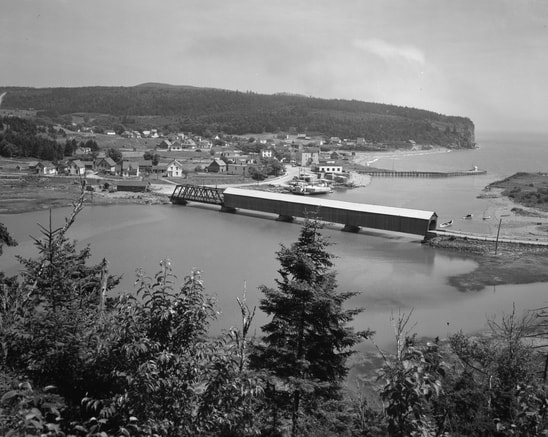
This incorporation was more than just a formality; it allowed the Legion to expand support to Veterans, establish branches, advocate for the rights of Veterans, and take a leading role in Remembrance services.
|
Article & Images Submitted by Jennifer Shelby, Local Author and CAC Storyteller 2026 marks the Royal Canadian Legion’s centenary year. Founded in 1925, the Legion brought various Veterans groups that were created following WWl under one umbrella, and incorporated in July of 1926 as the Canadian Legion of the British Empire Service League.
This incorporation was more than just a formality; it allowed the Legion to expand support to Veterans, establish branches, advocate for the rights of Veterans, and take a leading role in Remembrance services.
0 Comments
"Named for the Bay of Fundy, Fundy National Park was New Brunswick’s first National Park" Image submitted by Daniel Sinclair In 1948, a large swath of land adjacent to the village of Alma, bordered by the Bay of Fundy, was allocated to become New Brunswick’s first national park. Two years later, it officially opened to the public on July 29th, 1950. As we celebrate Fundy National Park’s 75th anniversary this year, it is a great time to reflect on how the park’s role has evolved over time. The park’s story did not start with its designation as a national park. The land has a rich cultural history, located in the unceded territory of the Mi’gmaq and Wolastoqey Nations, who have been present in the area since time immemorial. After European contact, several communities were established within today’s park boundaries and subsisted on logging, milling, farming, shipbuilding and fishing activities. Submitted by: Janet Clouston, Albert County Museum Managing Director
Community is at the heart of the work of the Albert County Historical Society and Museum! To share the history of the Society, it was at an organizational meeting held in Alma on 29 July 1951, that twenty founding members representing the six parishes of Albert County established the Albert County Historical Society, which was later incorporated in 1957. The aim of the Society was to perpetuate and preserve the history of Albert County including the historical documents and relics pertaining to the County. As artefacts were being donated by Society members and County residents, the decision was made to establish the Albert County Museum, which opened May 19, 1962 in the Tax and Record Office Buildings at the Shiretown capital in Hopewell Cape, following the Albert County Municipal Council being abolished. Other County buildings on the Shiretown property were also then turned over to the Albert County Historical Society, resulting in what is now the Albert County Museum and R.B. Bennett Commemorative Centre. In the nearly 74 years that have passed since the Society was founded, the tradition of community and outreach carries on. We would like to include more photographs and stories about experiences "back in the day." This could range from stories you heard about clearing land in the 1800s to tales from the one-room schoolhouses to even homesteading experiences from back-to-the-landers in the '70s.
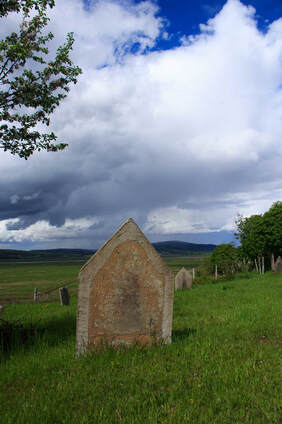
The anecdotes could be funny, emotional or simply educational. Stories from our past may help us better appreciate and understand our community and environment. If you would like to share a story or just an image, please email Janet Wallace at [email protected]. Image by J. Wallace: Headstone in Harvey By Idella (Steeves) Lazar “Without the past, there is no present, nor can we build a future.” Anon. I was born a Steeves from the line of Lewis, the 7th son of Heinrich and Rachel. Lewis died in 1827. Some time ago, our family discovered where Lewis was buried and we were pleasantly surprised that the headstone is still standing and legible. "So what?" some would say. By Kirstin Shortt It is 1845 here in Salmon River, a village in southeast New Brunswick. We are a hard-working lot of farmers, shipbuilders, lumbermen and fishers. Thanks to a weir we built in 1840, we are having huge success fishing shad and herring. Greetings from the Albert County Museum. The 2018 summer season is in full swing and we are so pleased to be welcoming the flocks of tourists visiting the many world class attractions in our wonderful county. A few weeks ago, I had the pleasure of giving a tour of the museum to a group of visitors from Texas. Very nice folk and quite insistent that they had never seen such an amazing and well-preserved array of artifacts and buildings. They told me it was just by luck that they noticed the Victory Cannons from the highway and decided to stop for a photo. One of the ladies exclaimed, "Can you imagine my surprise when I turned away from the cannons and there, right in front of me, was a beautiful display of heritage buildings in all their glory!" She grabbed me by the elbow and stared at me with her wide blue eyes and said, "You do realize what a jewel you have here!" Story and photography by Deborah Carr There can be no greater harbinger of a New Brunswick spring than the sight of silver buckets affixed to the majestic sugar maple (Acer saccharum). They bring visions of sticky sweet maple taffy, creamy butter, blocks of sugar, or buttermilk pancakes swimming in pure fragrant syrup. And there can be nothing to enliven the winter-weary heart more than an excursion to the sugar woods on a sunny, warm spring day. Search out one of these traditional wooden sugar shacks and you’ll find a social springtime gathering place where wood smoke competes with the maple steam, and the ‘one-upping’ stories compete with the sugaring chores. Heinrich and Regina Stief left their homeland Germany in 1749 and settled in Pennsylvania. From there, in 1766, they and a small group of fellow settlers migrated to the rough terrain around New Brunswick's Petitcodiac River.
Faced with starvation, frigid winters, and abandonment by their sponsors-‐among them Benjamin Franklin‐-the settlers defied the odds by not only surviving, but prospering. The Stief family finally settled in what is now Hillsborough, Albert County, New Brunswick. In the Return of Inhabitants of the Township of Hillsborough taken in 1783 the Stief name disappeared and was anglicized into Steeve. The Walling Map of 1862 records the name as Steves and after a couple other subsequent ‘clerical errors’ the name has become Steeves. Steeves descendants now number upwards of 300,000 worldwide. What are the Top Ten Historical Events in New Brunswick's Albert County?
Click on Read More to discover the top ten historical events according to Stuart Liptay of the Albert County Museum. |
Culture & Heritage
Thanks to our Advertisers! Connecting Albert County would like to thank the following supporters & advertisers: Platinum - Bennett and Albert County Health Care (BACH) Foundation - Horizon Health Network Resiliency Committee - Village of Fundy Albert Gold - CBDC Westmorland Albert - Hon. Rob Moore, MP for Fundy Royal Silver - Albert County Funeral Home - Friends of Fundy Bronze supporters - Albert County Pharmacy - Crooked Creek Convenience - Jeff MacDougall, SE Mutual Insurance - McCarthy Construction - NBSCF If you would like to support Connecting Albert County, visit our Advertising page or Donation page. With your support, we can continue to share the news of rural Albert County. Comments We welcome comments to our blog postings. Please provide your email address and name with your comment, and respect our content guidelines. Archives
August 2026
Categories
All
|


RSS Feed